Winter is cold and flu season. A strong, healthy immune system is an important factor in getting through the cold season without sniffles and colds. A few ideas from Ayurveda can help us. For a few thousand years, Ayurvedic medicine has assumed that, above all, harmonizing measures are the best protection against external factors such as viruses, bacteria and fungi.
The following recommendations are basic rules for staying healthy and fit through the cold season. They offer you support if you regularly suffer from colds and coughs in winter, if you are an allergy sufferer or plagued by hay fever – or if you simply want to do something good for yourself.
The Most Important at a Glance
- Rest and relaxation are crucial for a strong immune system.
- Avoid causes of disease through healthy habits.
- One warm meal a day and avoiding processed foods support health.
- Healthy routines and Ayurvedic practices strengthen the immune system.
- Soothing teas and meditation help with mental stress.
A Healthy Mind in a Healthy Body
We need rest and relaxation to strengthen our immune system. Now the question arises, where does relaxation begin and where do you find peace? Certainly not with your smartphone in bed, with your laptop on the sofa, not at the fifth video conference in your home office, with dinner from a delivery service in front of Netflix. Even if your body is switched off on the outside: Your mind is running a marathon, our central nervous system never gets to rest, we lose our balance.
Because for both your mind and your body it is constant stress when you continuously receive and process messages. Your stress hormones are elevated, your central nervous system barely gets any rest, impressions can no longer be processed. The short-term result: You become irritable, sleep poorly, eat more than you can burn through exercise, become thin-skinned. The long-term result of this vicious cycle: Your immune system weakens, you become more susceptible to illness.
Of course, the outside world and its stimuli are rarely something you can switch off. As social beings and part of society, we will always be exposed to stimuli we cannot control. But: You don't have to suffer from them! Emancipate yourself from victimhood, because you unconsciously expose yourself to many stimuli. The key word here is: personal responsibility.
Use your personal responsibility and ask yourself: How am I feeling right now? And if you're not feeling well, which additional sources of stress can you avoid to withstand the inevitable stimuli and remain in physical and mental balance?
Let's look a little deeper into Ayurvedic medicine and find solutions. Because they exist. Both for prevention and for acute illnesses.
Two Simple Ayurvedic Basic Rules for Health Maintenance
1. Avoid Causes of Illness
Our Western consumer society primarily asks "What else can I buy to be healthy and happy?". Deficiencies can be substituted and compensated with little effort. The fact that this attitude brings a whole string of consequences – environmental impact, waste, exploitation, but also physical effects – is obvious. Instead of fighting symptoms, Ayurvedic medicine asks about the causes of illness.
A more sustainable question about health could thus be: "How can I eliminate the causes of my unhappiness / my illness? Which habits are harmful and which healthy habits can and should I cultivate?"
What does that mean in concrete terms regarding infectious diseases? It's quite simple: We need to strengthen our immune system and keep harmful viruses and pathogens away. The very simple things to handle come first in all infectious diseases:
- Take sensible hygiene measures: Wash your hands regularly and avoid touching your mucous membranes with your fingers.
- Avoid weakening your body in general: Stress, smoking, alcohol and other toxins.
2. Ahara, Vihara – Strengthen Your Immune System Naturally Through Healthy Nutrition and Lifestyle
Even Paracelsus warned: Eat in such a way that your food is your medicine, not that medicines become your food. And it's true: We often forget the importance of our food for our health. We've become lazy and our food should primarily be quickly available, inexpensive and uncomplicated.
What you should pay attention to:
- Prepare at least one warm meal with warm drinks per day
- Avoid processed products, no acid-forming ingredients such as white sugar, white flour, coffee, alcohol, cold dairy products or yogurt
- Eat when you're hungry, not out of boredom, habit or appetite
- Avoid too much drinking with meals
- Avoid toxins (tobacco, alcohol, sprayed fruits & vegetables, stress, etc.)
- For constipation: not a large portion, but rather drink plenty of warm water / tea
- Ask yourself: What do I really need and what effect does it have if I consume XY?
To ensure optimal nutrient supply and support your digestive system in its work, your diet should be freshly prepared as much as possible and tailored to the time of day and season. This may require some rethinking and planning – but over time, the initial adjustments and daily routines become calm habits and well-being.
Prevention with Ayurveda: Create Routines That Strengthen Your Immune System
In the cool seasons, metabolism slows down, digestive fire decreases, deposits and diseases settle in more quickly. To support your body, healthy routines help. We would like to share a few tips for your daily routine here. We distinguish between a simple and an advanced daily routine. Depending on how much effort you can put in, choose one of the two routines and stick with it for at least six weeks.
Simple Daily Routine
In addition to your mindful approach to nutrition and sufficient exercise, certain Ayurvedic remedies and teas can help you support your metabolism during the day.
In the Morning – Strengthen with Rasayana
In the morning, take 1 tsp of Chyavanprash or Amrit Kalash. Rasayanas are pasty tonics made from dozens of herbs, fruits, roots, ghee, honey and spices. They strengthen tissues and digestive fire.
In the Morning – Make Spiced Tea
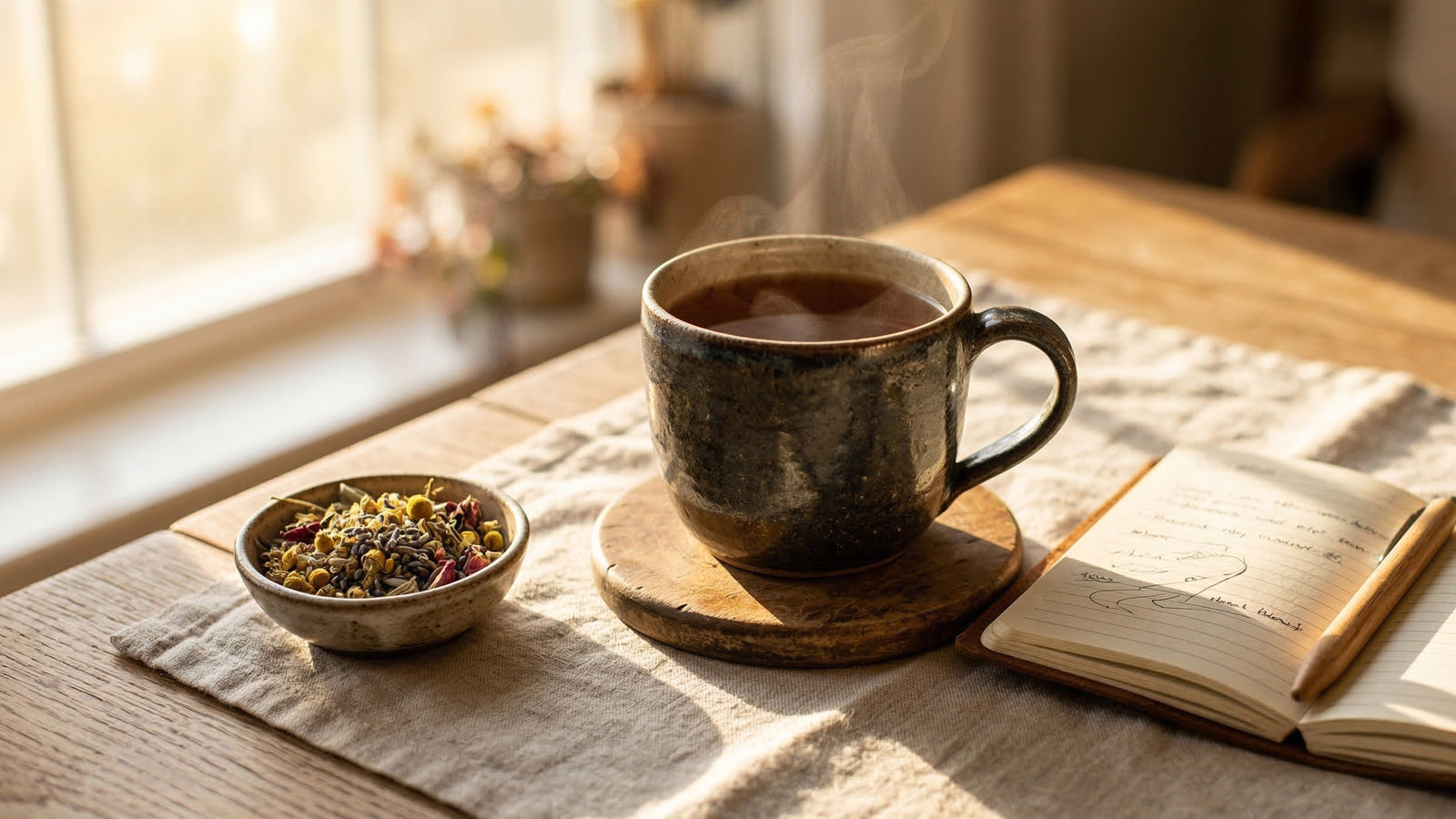
During the morning, drink a spiced tea made from 1 liter of water, cooked with a blend of Tulsi, ginger, cinnamon, licorice, ajwain and black pepper. 1 tsp of the blend is simmered for 10 minutes. The first cup is drunk warm immediately, the rest is consumed throughout the day. More hot water can always be added to the decoction.
Before Lunch – Support Digestive Fire
Drink 1 cup of warm water with 1 knife tip of Trikatu (a blend of ginger, black and long pepper), ½ tsp of turmeric and some honey before eating.
Before Going to Sleep – Come to Rest
End your day consciously with a "sleep milk". Instead of dinner, you can have a golden milk with turmeric and spices before brushing your teeth.
Advanced Daily Routine
You drink spiced teas and hot water all day anyway and use Chyavanprash as jam and want more? Then it's time to expand your simple daily routine. The advanced version mainly adds a cleansing aspect: mucous membranes are oiled, airways are cleared, metabolism is stimulated and the mind is calmed. You can incorporate one or more of the following measures into your daily routine depending on how you feel:
- Morning oil pulling with sesame oil
- Cleaning your tongue with a tongue scraper
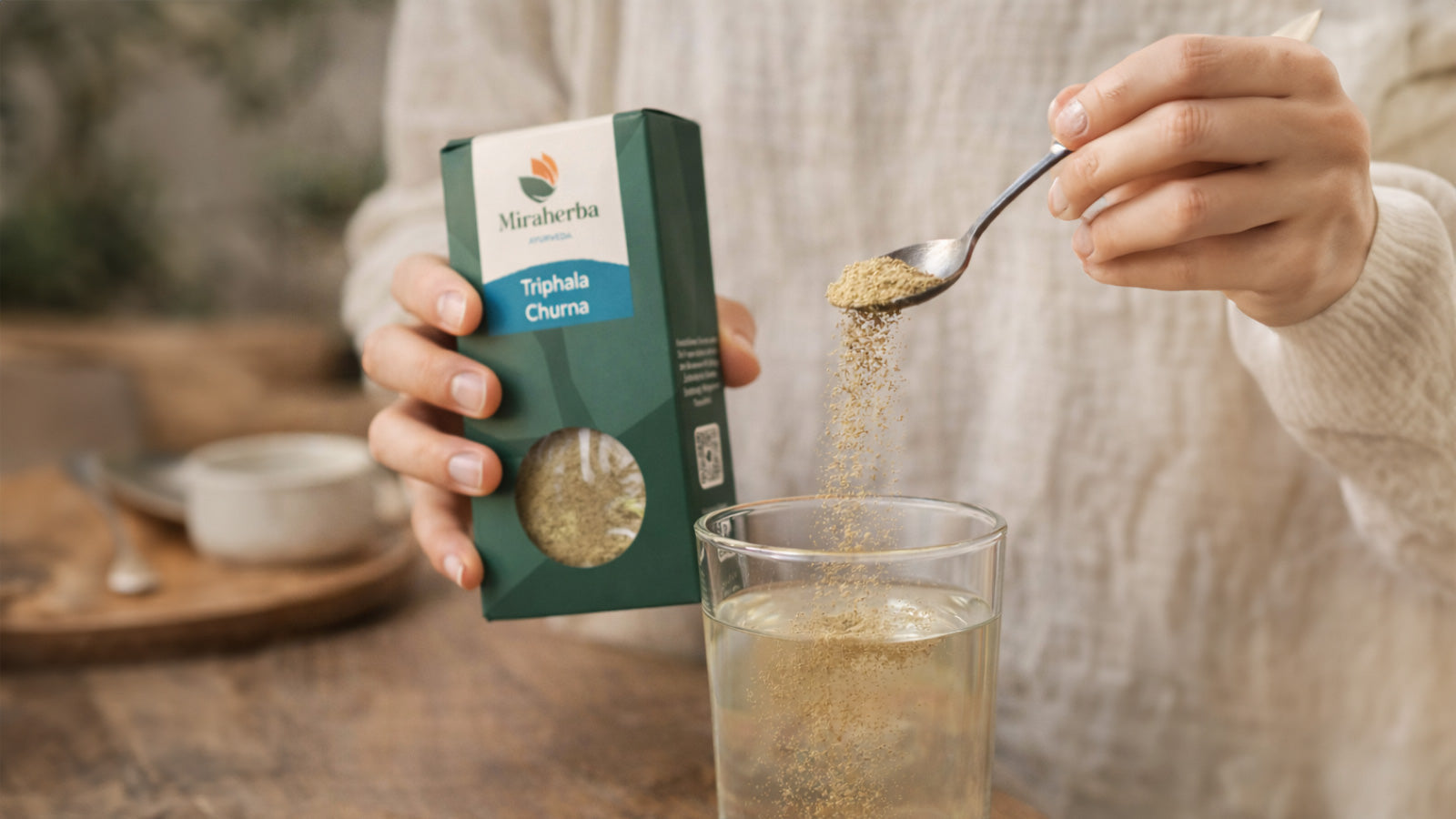
- Gargling with warm water with a little turmeric and salt. Optionally also with Triphala or licorice
- Oiling the nose (Nasya) with Janu Taila or Shadvindu Taila – sesame oil or ghee can also be used. 1-2 drops are applied to the mucous membranes with your little finger in the nose in the morning and evening. This prevents drying out and prevents dust and germs from attaching.
- When staying in very dry rooms and at the onset of a cold, the nose can also be rinsed with a neti pot with warm water
- Helpful in dry air are also steam inhalations with ajwain, which contains many essential oils
- Daily meditation, Pranayama (breathing exercises) and yoga calm the mind. As do walks in nature and exercise.
- Sufficient sleep, 6-8 hours, in a well-ventilated, not too warm bedroom
What If Your Psyche Suffers? Mental First Aid Strengthens the Immune System
Your psyche also suffers from constant external stress and nervous sleep disturbances, fears and worries can creep in. To find inner peace within yourself, meditation is, for example, a good helper. Other hobbies or sports, from jogging to yoga to swimming, can depending on your type be a good way to achieve emotional balance. For more serious mental complaints, visiting a therapist can help.
Soothing Teas and Plants
If you still have difficulty fighting nervous restlessness, soothing teas and plants can support you. There is a whole range of calming plants; we've listed three for you here. Choose one of the following teas based on your personal preference:
- Ashwagandha – the Ayurvedic herb is available as tea, capsules, churna/powder or aristham/fermented preparation.
- Passionflower – as tea
- Damiana – as tea
I Caught It – What to Do in Case of Acute Infection?
Even if we take every conceivable preventive measure, some of us will still get a viral infection. If you're currently in that unpleasant situation, I wish you all the best at this point.
Note: The therapeutic advice that follows is merely a suggestion and does not relieve you of the obligation to consult your family doctor if illness persists or if you have high fever.
A Few Herbal Home Remedies from Practice for Colds
With a cold, that is a runny nose and sniffles, your body needs a lot of fluids so the mucus can drain well. Warm tea helps especially well because the vapors also penetrate the sinuses and provide moisture on site. If you then choose a tea whose essential oils help the mucous membranes to reduce inflammation and have antibacterial effects, you're really doing yourself a favor.
Wintergold Herbal Tea
We suggest our herbal tea blend "Wintergold", which consists mainly of European medicinal herbs. Linden flowers, echinacea, sage, thyme and more have long been known and proven for their beneficial effects on respiratory tract conditions.
Sitopaladi Churna
Alternatively or additionally, the Ayurvedic spice blend Sitopaladi Churna is a real secret weapon. Mix the blend of warming, pungent spices such as pepper, cinnamon, cardamom and more with half a teaspoon of honey and a sip of hot water to make a shot. Drunk several times daily, Sitopaladi ensures clear airways.
Gargling: First Aid for Sore Throat
A first aid measure for sore throat is gargling with warm salt water in the morning and evening. This simple, inexpensive measure effectively relieves inflammation in the throat area and dissolves thick mucus and the pathogens it contains. The effectiveness of salt water gargling has been proven by several independent studies. But you can also gargle with a number of other additives besides plain salt:
- Western medicine recommends gargling with iodine or Beta-Isadona, which certainly fights pathogens, but with more frequent and longer use can also disrupt your oral flora.
- For inflammation in the mouth and throat, you can gargle with a strong (cooled) sage tea, or add a few drops of essential sage oil to the water. Sage has an astringent and antibacterial effect.
- The effectiveness of grapefruit seed extract on pathogens is not comprehensively scientifically proven. If you want to try it, add 5 drops to warm gargling water.
- Turmeric or the active ingredient curcumin also has anti-inflammatory properties. Add half a teaspoon to your gargling water.
- The Japanese ume plum also has anti-inflammatory properties. Alternatively, stir a small amount of ume su into a glass of water.
Our Mix for "All Cases"
If the throat area shows strong redness (inflammation), small white spots and deposits, it can also be carefully brushed with an appropriate solution.
Ingredients:
• 10 tbsp ume su
• 30 drops Citroplus / grapefruit seed extract
• 10 drops essential turmeric oil
Preparation: Shake everything well in a screw-top jar. A cotton swab can now be dipped in this solution and the reddened or white areas in the mouth and throat can be dabbed with it.
Small tip for application: Don't stick your tongue out so far and guide the swab to the back when exhaling (through your mouth). This minimizes the gag reflex.
With Fever
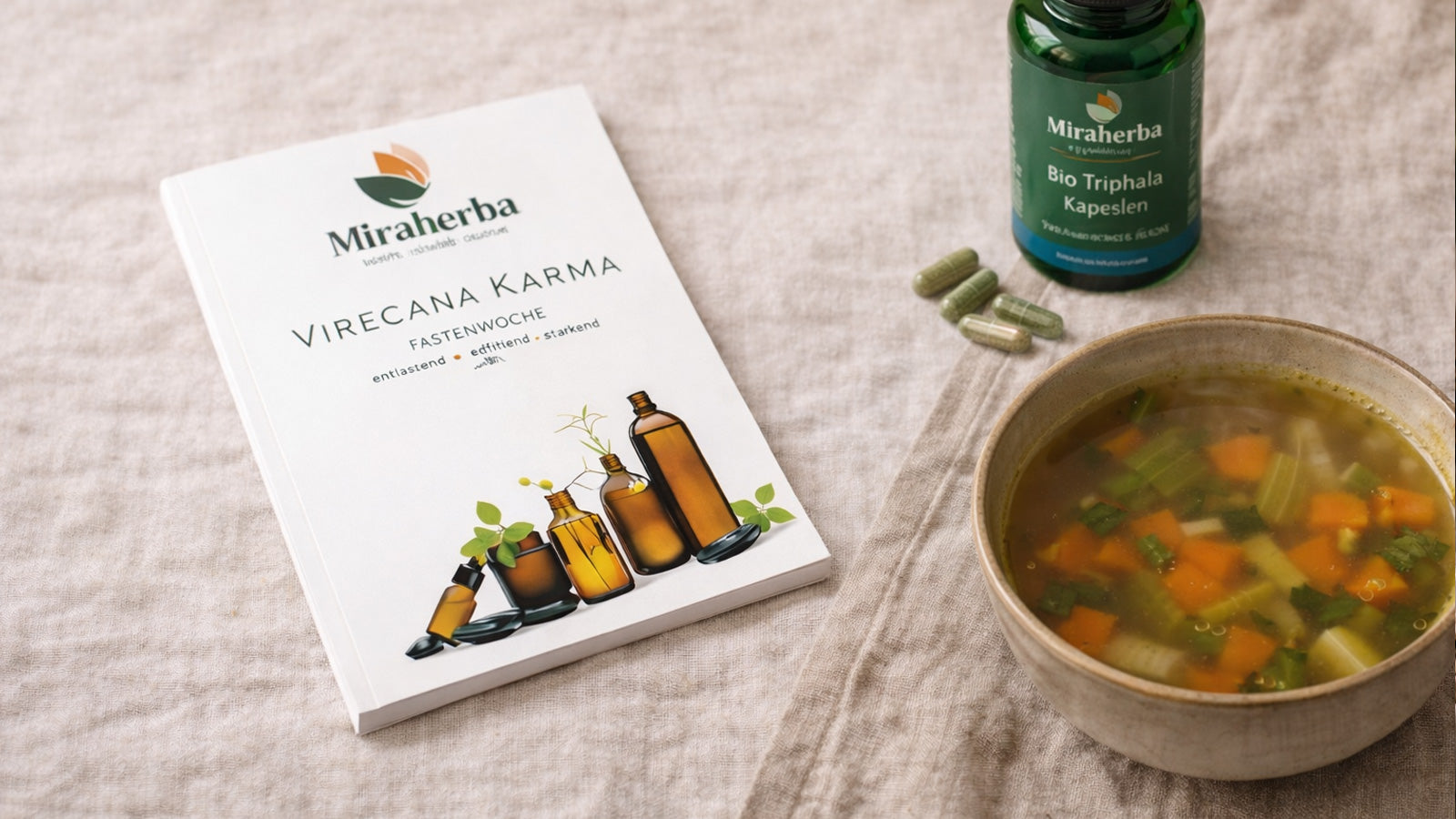
Fever is first of all nothing bad and does not need to be fought immediately. Because your body tries to destroy pathogens by raising its temperature. However, any fever impairs metabolism and produces Ama (waste substances). Therefore, switch to fasting or light, warm nutrition when sick. Give your body the opportunity not to be busy digesting, but to be healing. Drink at least 2 liters of warm, boiled water throughout the day, preferably with ginger or turmeric.
Conclusion
A strong immune system is the key to a healthy winter. By applying Ayurvedic principles such as healthy nutrition, regular routines and mental balance, you can significantly improve your well-being. Make sure you get enough rest, reduce stress and support your body with natural remedies. This way you're well equipped to stay healthy through the cold season.