When exploring the common remedies of Ayurveda medicine, you can hardly overlook Shatavari, the wild or Indian asparagus. Shatavari, botanically Asparagus racemosus, is an exceptionally versatile root used as a strengthening and rejuvenating agent as well as a medicinal plant. Its Vata- and Pitta-reducing properties have proven particularly effective in men's and women's health. In Ayurveda, you will encounter Shatavari as a fixed component of medicated oils, herbal wines, Churnas, Grithams, and as a plant decoction. Discover the magic that dwells within Shatavari.
The Essentials at a Glance
- Shatavari is known for its Vata- and Pitta-reducing properties.
- Used in Ayurveda as a strengthening and rejuvenating agent.
- Contains asparagine, important for detoxification and nervous system function.
- Used as an Ayurvedic aphrodisiac and for fertility support.
A Little Botany
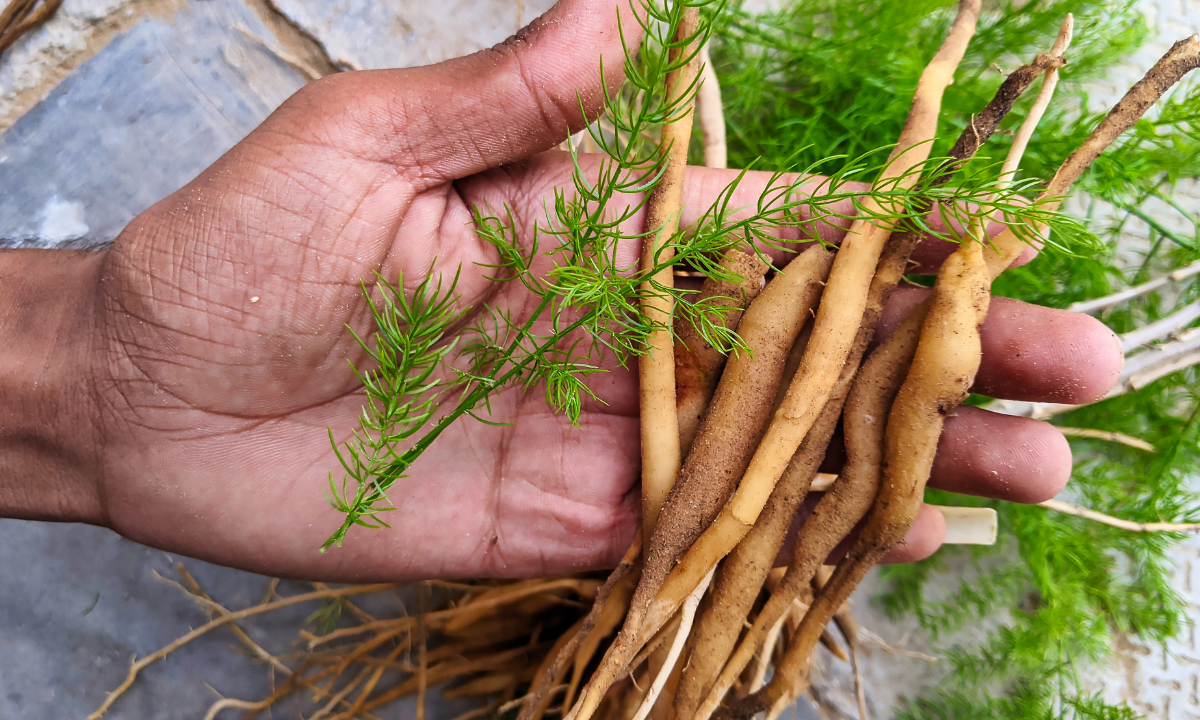
The wild asparagus known in Sanskrit as Shatavari or Satamuli is indeed a species of asparagus but has little in common with the culinary asparagus we know. This many-branched thorny bush from India carries numerous roots on its rootstock, approximately 30-100 cm long and around two centimeters thick. Hence the name "Satamuli" – it can be literally translated as "with a hundred roots".
Its green leaves are small, soft, and needle-like. A particularly special time is between March and June: the bush now produces many white flowers and subsequently bears small red fruits. Shatavari grows throughout India at heights of up to approximately 1,300 meters.
An Excursion into Biochemistry: Asparagine
In Ayurvedic medicine, the fresh foliage and the dried and ground root are primarily used. For preparations such as oils or Asavas (herbal wines), the fresh root is also used. In these medicinal plant materials, in addition to saponin and Shatavarin, a potent protein compound with high asparagine content and saccharin is found.
What exactly is asparagine and why is it important?
Asparagine and aspartic acid are also found in our European culinary asparagus, as well as in several other foods. With the help of enzymes, our body also produces asparagine, a water-soluble amino acid. This classifies asparagine as a so-called semi-essential amino acid. Aspartic acid and its products are vital as components of tissues and as precursors for neurotransmitters. Chemical messengers (neurotransmitters) transmit information from one nerve cell to the next. It's good when that works smoothly. Additionally, they support the body's detoxification by stimulating kidney and liver function.
While the body can produce this amino acid in certain quantities on its own, large amounts of asparagine can be consumed through the body's natural blood detoxification (particularly to combat smoking, alcohol, and malnutrition) or through prolonged stress. Result: The asparagine level drops. Diseases and natural aging processes also lead to asparagine no longer being produced in sufficient quantities.
Why asparagine deficiency should be prevented
If the organism lacks asparagine, several bodily processes may be restricted or disturbed. Possible symptoms of asparagine deficiency are usually found at the level of performance, endurance, libido, immune system, and detoxification organs (liver and kidneys). The result: Both physical and mental performance decline, leading to rapid exhaustion and reduced stamina. Sexual drive and fertility decrease. The organism becomes more susceptible to inflammation, infections, and allergy-like irritations; wound healing is impaired. Alcohol is metabolized poorly, detoxification processes are inhibited.
The Effects of Shatavari in Ayurveda: Vata- and Pitta-Reducing, Kapha-Increasing
As is well known, Ayurveda is the knowledge and science of life. Life-sustaining measures and therapies are at the forefront of this ancient alternative medicine. This means one avoids life-shortening habits and supports people in their natural life phases and aging processes. To support individual constitution, there is everything that rejuvenates, strengthens, and detoxifies: dietary recommendations, movement guidance, manual therapy, and herbal medicine. And that is where Shatavari comes in.
The taste 'rasa' of the Shatavari root is sweet and bitter. The quality 'guna' of Shatavari is heavy and oily. Thus, the medicinal plant reduces the two Doshas Vata and Pitta. Through the sweet 'vipaka', the taste after digestion, and the cooling 'virya', the thermal effect, Shatavari increases Kapha.
The Effects of Shatavari as an Ayurvedic Tonic
Shatavari is used in Ayurveda as a building and strengthening agent. The wild asparagus is a Rasayana for the reproductive tissue 'sukra dhatu'. It increases Ojas (tissue) also at the level of plasma 'rasa dhatu' and bone 'asthi dhatu'. In old age, Vata increases, we dry out, become more prone to inflammation, and lose earth; Kapha wants to be nourished. This is precisely where Shatavari's effects come in. It is unsurprising that Shatavari and its pain-relieving property are used for rheumatic and joint diseases. External applications with Narayana Tailam are recommended here.
On a mental level, Shatavari acts as a brain and nerve tonic. The plant helps with anxiety disorders, nervousness, concentration weakness, and nervous exhaustion. With stress, however, Shatavari appears to be less potent than Ashwagandha.
Due to its sweet taste and oily, mucilaginous quality, Shatavari is considered the remedy of choice for stomach hyperacidity and heartburn. Taking Shatavari gritham as well as the Churna is recommended here. Before taking, boil the Churna in warm milk.
Shatavari: Ayurvedic Aphrodisiac
In the Handbook of Medicinal Plants of Ayurvedic Medicine (Zoller, Nordwig 1997), Asparagus racemosus is listed as an aphrodisiac. Shatavari gritham, a mixture of Shatavari and ghee, is particularly effective. It should be noted that in Ayurveda, "aphrodisiac" primarily means "building, tissue-improving". Of course, this also has positive effects on libido and various forms of sexual dysfunction. One of the common translations of Shatavari as "the one who has a hundred men" already hints at this. Thus, it is used not only in women's medicine but also in men's medicine for impotence and inflammation of the sexual organs.
Shatavari in Women's Health
As one of the most important plants for unfulfilled fertility wishes and many conditions in the urogenital area, Shatavari is indispensable in women's health. The medicinal plant is attributed a cooling effect in breast inflammation. By strengthening reproductive tissue, it is said to support fertility wishes and fertility in women and promote seed production in men.
Shatavari for Cycle Problems and Menopause
The favorable properties of Shatavari regulate the female cycle, alleviate premenstrual syndrome (PMS), and have a positive effect during the demanding time of menopause. Especially with uncomfortable hot flashes, night sweats, or fluid retention in tissues, Shatavari soothes and strengthens.
Due to its favorable effect on rasa dhatu, the powder is also frequently used in leukopenia and anemia. In these cases, an experienced Ayurvedic practitioner should definitely be consulted.
Side Effects of Shatavari
Important: The bark of the shrub is toxic. Use only the leaves and roots of wild asparagus.
Beware of asparagus allergies! If you are allergic to Asparagus officinalis, there is a high likelihood that you are also allergic to Asparagus racemosa. Avoid taking it in this case.
If you have heart or kidney problems, please consult your specialist beforehand to clarify whether taking Shatavari is contraindicated. Similarly, the plant should only be used for Kapha conditions (cysts, fibroids) after consultation with an experienced Ayurvedic practitioner. Due to its Kapha-increasing effect, which is strengthening and building, taking Shatavari can lead to weight gain. However, this is negligible compared to the positive properties of Shatavari.
Prepare Shatavari Gritham Yourself and Take It Correctly
The traditional way to take Shatavari is as Satavarighrta or Shatavari Gritham:
What You Need
- 1 part root juice of Asparagus racemosus*
- 1 part ghee
- 10 parts milk
- some sugar or honey
- long pepper
Step by Step
- Prepare only small amounts of Shatavari Gritham at a time and store in a clean screw-top jar in the refrigerator.
- Boil the ingredients together.
- Then mix the mixture with sugar or honey and long pepper.
- Take 1 teaspoon of this mixture daily.
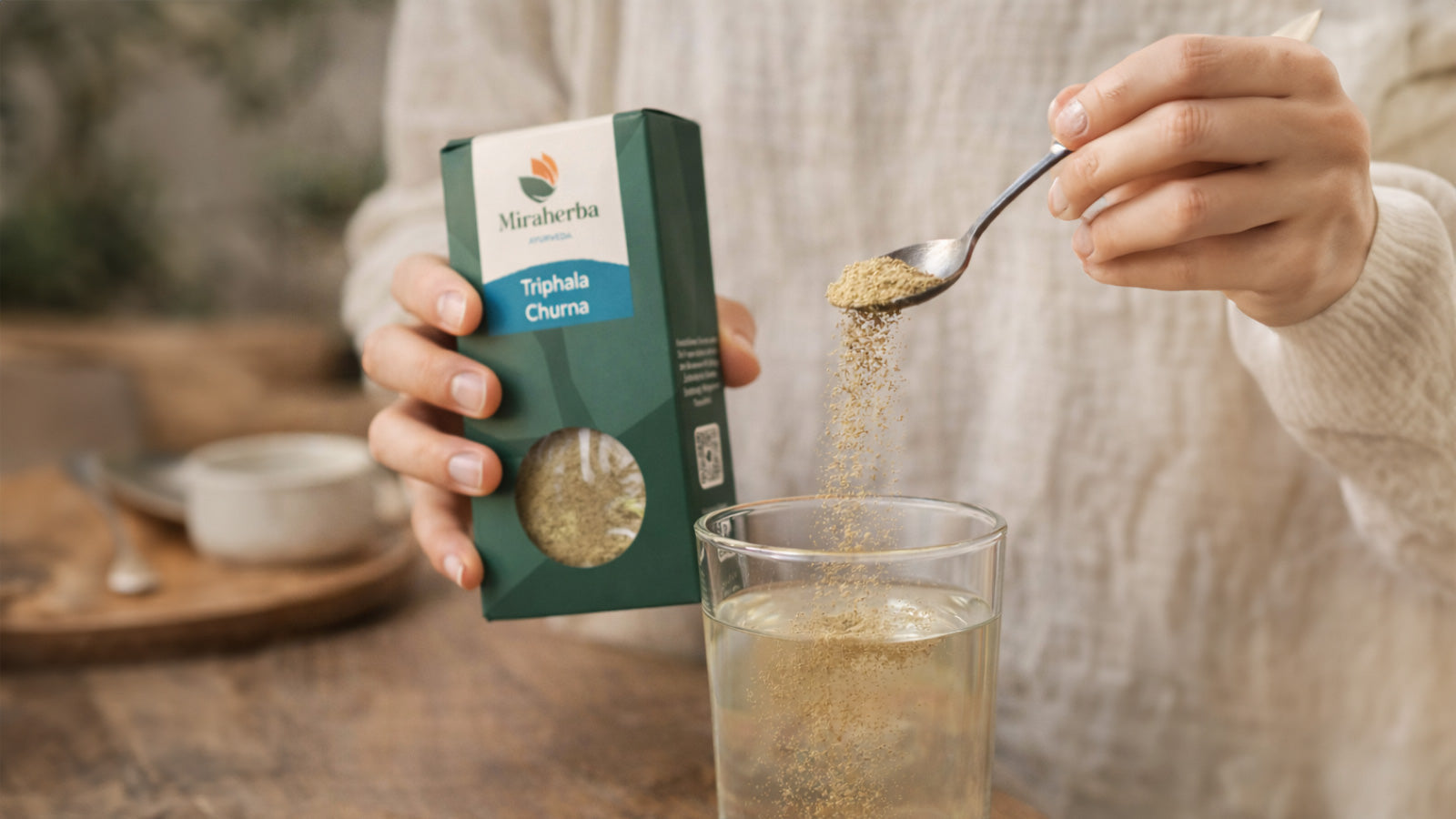
* Since fresh Shatavari root juice is rarely available in this region, you can alternatively use the dried, ground root – that is, Shatavari Churna. Boiling the Churna with milk and ghee is also documented in Ayurvedic recipes.
Stress-Free and Relaxed – Recipe for Shatavari Energy Balls
If you enjoy Laddhus, those little round Indian energy balls, this is the place for you. Shatavari and Ashwagandha combine into a relaxing blend, rounded off by nuts, spices, and coconut flakes. For snacking in between, or as a gift for those yearning for love.
What You Need
- 150g dried fruits (e.g., dates, figs, apricots)
- 100g nuts (as desired: cashew, almond, macadamia)
- 50g coconut flakes
- 2 tsp coconut oil
- 1 tsp cinnamon
- 2 tsp Ashwagandha Churna
- 1 tsp Shatavari Churna
- ½ tsp cardamom powder
- 1 pinch Himalaya salt
Step by Step
- Blend: Add all ingredients to a high-powered blender. This sometimes requires a few attempts. If your blender can't handle it, a large cutting board and a hacking knife will also work. Transform the ingredients into a sticky mass.
- Shape: Using a small spoon and your hands, form the mass into bite-sized balls.
- Decorate: Then roll the Laddhus through a small coconut flake bath. Perhaps mixed with rose petals? This is the moment for free creativity: cocoa powder, tiger nut flour, cocoa pieces – just try it out!
- Cool: Finally, place the Laddhus in the refrigerator for a few hours. After that, they go into a jar for storage or are simply eaten immediately.
Regenerating Face Mask with Shatavari Gritham
Normally, for skin diseases and inflammation, the leaves of wild asparagus are cooked, smeared with ghee, and applied. I discovered a nice application during my studies in Ayurvedic medicine, almost incidentally. When making Shatavari gritham, after filtering we had a large amount of the powder cooked in the ghee left over. The powder contains the ground root. We used this thick paste together with some lava earth as a face mask. The participants in the Panchakarma treatment were delighted with the smoothing and regenerating effect. Here's what you need:
What You Need
- 2 tbsp ghee melted in a water bath
- 1 tbsp Shatavari Churna
- 1 tbsp lava earth
Step by Step
- Mix: Stir the powder together and into the melted ghee until a paste of appropriate consistency is formed.
- Apply: Best applied while lying down to the face, neck, or décolletage and allowed to work for about 20 minutes. Since the mass melts from the warmth of the skin, it is advisable to place a towel underneath.
- Remove: After use, wash the paste off with lukewarm water.
Variation: This recipe works well with variations. Especially for inflammatory skin conditions and redness, you can add turmeric powder to the mixture and apply it to the affected areas. Be careful with your clothing – turmeric colors quite intensely yellow.
Conclusion
Shatavari, wild asparagus, is an impressive plant with versatile applications in Ayurvedic medicine. From supporting fertility and libido to its role as a strengthening agent, Shatavari offers a broad range of benefits. Through its special biochemistry, particularly its asparagine content, it plays an important role in promoting health. However, it is important to pay attention to possible side effects when using it and to consult an expert if you have existing health problems. The traditional preparation and application of Shatavari Gritham and Energy Balls demonstrates how versatile and effective this plant can be.