Many people know the uncomfortable feeling of pain or itching in an intimate area that nobody likes to talk about: hemorrhoids, called Arśa in Sanskrit. In their healthy, functional state, they are a blood vessel cushion at the anus and part of the well-perfused external sphincter. One speaks of an ailment when complaints arise: the blood vessels protrude outward, become pinched or even injured. This leads to itching and burning pain or even bleeding. It can become particularly uncomfortable during bowel movements.
The most important facts at a glance
- Hemorrhoids can develop due to hormonally caused weak tissue, digestive problems, or weak connective tissue.
- Ayurvedic treatment is based on the involved Doshas and aims to combat the cause.
- Different Dosha types of hemorrhoids have different symptoms and treatment methods.
How do hemorrhoids develop?
Hemorrhoids often occur in women during pregnancy or after childbirth, in connection with hormonally weak tissue. In all genders, digestive problems with very firm stool can also be the cause, often accompanied by sedentary work without much movement and weak connective tissue. First signs are persistent itching and burning sensations at the anus, with very firm stool also associated with fresh blood deposits on the stool.
How are hemorrhoids treated in Ayurveda?
Ayurvedic medicine bases its treatment on the involved Doshas. A distinction is made between bleeding and non-bleeding hemorrhoids. From an Ayurvedic perspective, they are the result of hard-to-digest food, blocked srotas (transport channels), insufficient Agni (digestive fire) and associated weak liver metabolism with accumulated mala (purīṣa, feces). Ayurvedic medicine sees the cause in the liver, caused by blockages of the blood vessels, srotas.
Ayurvedic treatment thus attempts to address the cause of hemorrhoids in order to prevent the development of new hemorrhoids – this is achieved through diet. The diet is adjusted according to the diagnosed Dosha disorder. Initial bleeding does not need to be stopped; it serves for cleansing.
Important: If the bleeding is very heavy and does not stop on its own after 2 days, you should definitely see a specialist who can take hemostatic or surgical measures.
The different manifestations of hemorrhoids in Ayurveda
Vāta Hemorrhoids
The hemorrhoids appear rough and dry with dark color. They are usually accompanied by bloating, loss of appetite, pain, and constipation. There may also be unclear pain in the hip area and lower back. By retaining stool, small tears, fissures, can occur at the anus, and blood deposits on the stool are possible. The causes are a Vāta aggravating, cold, irregular, overly bitter or pungent diet, or excessive exposure to cold in the lower, Vāta region of the body.
Pitta Hemorrhoids
Hemorrhoids triggered by Pitta are soft, often moist with unpleasantly smelling yellowish-reddish discharge. The color is varying, from red to bluish. Bowel movements tend to be fluid, often mixed with blood. Typical are the hot, burning sensations and itching at the anus. Pungent, sour, and salty diet, alcoholic beverages, and Pitta-increasing behavior and emotions cause the condition.
Kapha Hemorrhoids
Kapha Arśa are large and smooth; bowel movements are heavy and slimy. The color is light, the itching intense, usually without pain. They are caused by āma, resulting from Kapha-increasing diet with too many sweet, sour, salty, fatty, and cold foods and beverages. Cold, lack of movement, daytime sleep, and lethargy support accumulation.
Tri doṣha Hemorrhoids
The symptomatology here can no longer be differentiated clearly. In this case, invasive intervention is usually necessary to eliminate acute hemorrhoids. After surgical measures, the triggering causes of the condition must be strictly avoided with the help of balanced diet.
How to prevent hemorrhoids with Ayurveda
An important preventive measure is Agni-stimulating, warm and regular diet and adequate fluid intake, preferably with warm water or herbal tea. This gives bowel movements a soft, easily passable consistency. If you have a tendency toward constipation, pay attention to regular fiber intake, e.g., in the form of flaxseed, psyllium husk, or similar. A supporting effect comes from 1 tsp of Haritaki with warm water in the evening.
Prevent hemorrhoids with Ayurveda diet
Ayurvedic medicine recommends light, vegetable-rich diet with Agni-stimulating spices and finely ground whole grain products. Bitter salads and vegetables such as artichoke, chicory, endive, radicchio, arugula, dandelion leaves, and daisy flowers stimulate liver metabolism and thus also digestion. Plenty of ghee in food improves the smoothness of bowel movements and protects against constipation and the risk of bleeding. Pungent spices such as chili, raw onions, and garlic should be avoided, as should fried foods.
Relieving first signs of hemorrhoids with Ayurveda
Sitz bath recipe for hemorrhoids
At the first signs of hemorrhoid enlargement, a daily sitz bath with a relaxing, skin-therapeutic herbal mixture is recommended. The warm water with the appropriate herbs has a relaxing effect, reduces itching, and promotes healing of small fissures. Instead of a sitz bath, the herbs can also be used for so-called steaming. For this, the herbs go into hot water and you sit, at an appropriate distance, over the steaming bowl.
Use 30 g of the following basic mixture for a sitz bath. The herbs are brought to a boil in a large pot with 2 liters of water, simmered for 30 minutes, and the decoction is strained through a sieve into the warm water of the sitz bath or everything together into the bowl for steaming. Sit for 10-20 minutes.
Basic mixture for a hemorrhoid sitz bath or "steaming":
In equal parts: Horsetail, Yarrow, Shepherd's purse, Calendula.
According to the symptom-determining doṣa, the following medicinal herbs can also be used:
Vāta – Pain: 2 tbsp each of Willow bark, Triphala curna, Arjuna
Pitta – Bleeding: 2 tbsp Oak bark, 1 tbsp red Sandalwood, 1 tbsp Turmeric
Kapha – Itching: 2 tbsp Triphala curna, 2 tbsp Bhringaraj curna or Daisy flowers.
Duration of use: 10-20 min.
Reduce itching: Cream hemorrhoids with ghee
The anal area should be creamed with ghee, even up to 2 cm inward, after bowel movements and before sleeping. Of course, thorough hand washing is recommended before and after. Alternatively, you can also prepare an herbal salve. This can be used prophylactically 1x daily in the outer anal area or in acute conditions 2-3x daily.
Recipe: Care salve
30 g ghee
30 g coconut oil
30 g Manuka honey
10 g beeswax pellets
- Melt in a small bowl in a water bath.
- Remove the bowl from the water.
- Stir in 2 tbsp Aloe vera gel and
- 30 drops of essential turmeric oil.
- Pour into a glass and allow to cool. The salve can be applied thinly 2-3 x daily.
Internal hemorrhoid treatment: Buttermilk, Turmeric and more
Buttermilk cure for hemorrhoids
Buttermilk is considered the first-choice remedy for hemorrhoids; a 7-14-day buttermilk cure is recommended.
Morning
Roasted barley flour (Tsampa) with buttermilk as a porridge. Plus drink ¼ liter of buttermilk
Midday
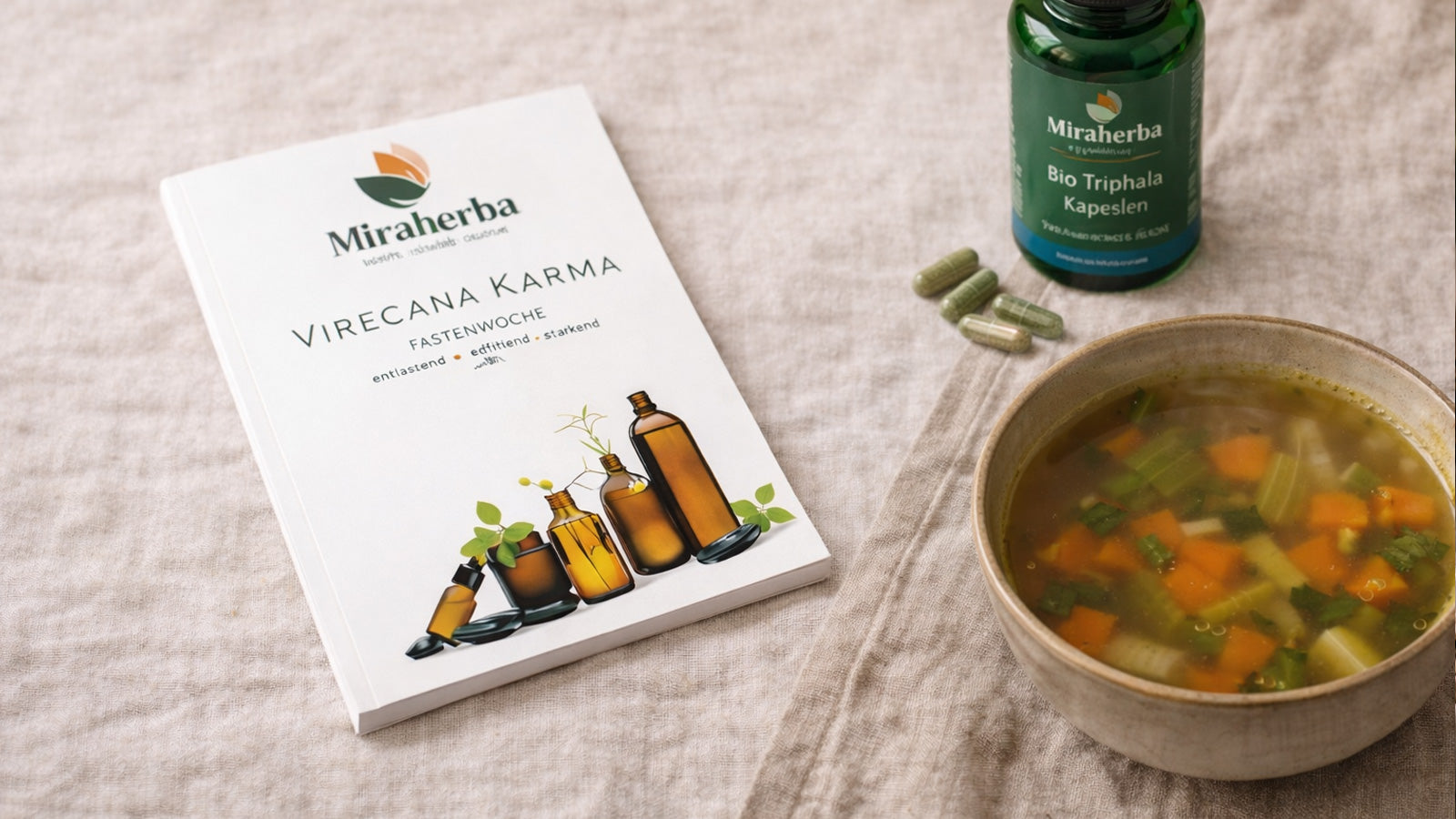
Thin rice soup cooked in water with a bit of rock salt and black cumin and ½ tsp Trikaṭu. Plus drink ¼ liter of buttermilk.
Evening
Vegetables braised in ghee with some rice and 1 pinch of Asafoetida. Plus drink ¼ liter of buttermilk.
Other supportive plants for hemorrhoids
The administration of herbs mainly serves to activate liver function, support digestion, and strengthen tissue. An important plant or root is Turmeric with its liver-strengthening and anti-inflammatory effects. Indian daisy, Bhṛṅgarāja or Bhringaraj, additionally has hemostatic effects, which is why both plants are often recommended together.
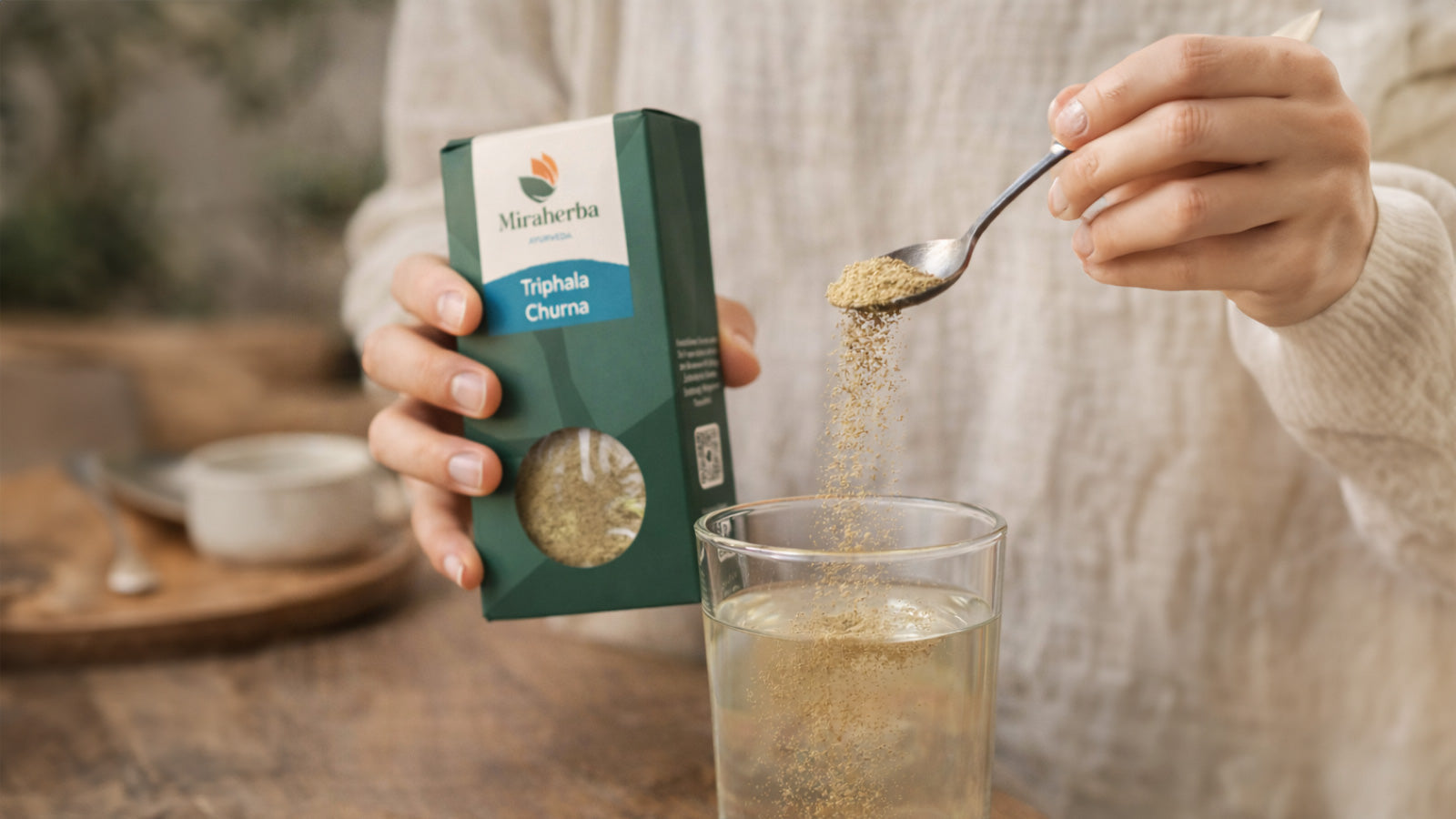
To support digestive activity by increasing volume, 1 tsp of ground Psyllium husks or flaxseed can be consumed daily with water or in muesli. Haritaki or Triphala capsules ensure regular bowel movements.
Ghee should not only be used in cooking, but can also be taken in the bitter medicated form, Panchatikta gritham, up to 3 tsp daily. Daśamūla ariṣṭa is an anti-inflammatory liquid herbal preparation that also reduces itching. Arishtas are alcohol-containing, which is why administration to pregnant women, nursing mothers, and children is strictly prohibited. Longer-term use is also not recommended!
Ayurvedic enemas: External treatment of hemorrhoids
External treatment is especially useful for very itchy and painful hemorrhoids. In Ayurvedic medicine, small retention enemas are used before bed with 20 ml of liquid, body-warm ghee or Sukumāra ghṛta. Care must be taken when inserting into the bowel so as not to injure the hemorrhoids. As a precaution, the ghee can be applied externally and carefully inward with the finger.
Larger enemas with buttermilk or goat's milk have a cooling and anti-inflammatory effect and are administered in the morning. 50-250 ml of cool milk are used. You should only perform these enemas under the guidance and supervision of an Ayurveda practitioner.
Important: Discuss all measures with your treating doctor. If symptoms do not improve after a few days, definitely see your primary care physician or healthcare provider.
Conclusion
Hemorrhoids are a common but often taboo topic. Ayurveda takes a holistic approach that treats both causes and symptoms. Adjusted diet, the use of herbs, and external applications such as sitz baths and enemas can help relieve discomfort and prevent recurrence. It is important to coordinate all measures with a doctor and seek professional help if symptoms are severe or persistent.