Especially during the cold and dark season, we long for nourishing and strengthening foods that support us in staying physically and mentally vital through the winter. Those building remedies are called Rasayanas in Ayurveda. In the following article we have compiled ten noteworthy facts about Rasayanas. One thing in advance: Rasayanas are of course not only used in winter.
The essentials at a glance
- Rasayanas are vitalizing and building mixtures that restore the balance of the Doshas.
- They work on the physical and subtle levels and support the formation of Ojas.
- Rasayanas can be taken as powder, paste, pill or elixir.
- The most famous Rasayana is Chyawanaprash, known for its strengthening effect.
- Many Rasayanas have a long shelf life thanks to ingredients like honey and ghee.
What does Rasayana mean? The Charaka-Samhita, rasa and yana
Overall, the literature on the Sanskrit term Rasayana is very limited. Therefore, the classical definition from the oldest and most important text of Ayurveda – the Charaka-Samhita – is frequently quoted. According to it, Rasayanas are: "Those remedies (and measures) that lead to an optimal condition of the nourishing tissue Rasa and the other tissues"
If we break down the word Rasayana, it falls into two parts: rasa and yana. The earliest use of the word rasa is found in the over one thousand year old Rigveda. There, rasa means water, cow's milk, vital fluid as well as seasoning or aroma. Later, the meaning of rasa is expanded in the Atharvaveda and now also means plant juice and taste. Only later in the Upanishads is this concrete culinary meaning of taste extended to an abstract aesthetic level. Very briefly, yana means something like vehicle or experience.
A Rasa-yana would therefore be literally translated as a taste that is transported, or an experience that is made through the ingestion of a potent remedy.
What are Rasayana substances in Ayurveda?
As a rule, Ayurvedic Rasayanas are vitalizing and building herbal and mineral substance mixtures aimed at bringing imbalanced Doshas into balance and regenerating the body.
In all Rasayanas you will find mixtures of a variety of strengthening and building fruits, vegetables, spices, roots, herbs, ghee, honey and sugar. Besides some other herbs, the following plants are frequently used in Rasayanas: Amla, Ashwagandha, Brahmi, Guduchi, Shatavari, Shilajit, Tulsi.
How do Rasayanas work?
Rasayanas are considered to be so-called rejuvenation remedies in Ayurveda. They work on all subtle and material levels of the human body and, according to Ayurvedic teaching, strengthen the immune system and physical strength. According to Ayurvedic teaching, aging and disease occur because the body is exposed to toxic influences. Due to their strong antioxidant effect, many Rasayanas intervene in the process of cell aging. They protect, purify and strengthen the various tissues. The antioxidant potential of certain Rasayanas was examined in a medical study by Ayurvedic doctors. For this, they tested six months of intake of the two toning herbs Guduchi and Ashwagandha in pill form and found that daily intake of 2 x 500mg over six months prevented oxidative stress.
How are Rasayanas connected to Ojas and Prana?
Rasayanas not only have a positive and strengthening effect on the material tissue, i.e., on skin, hair, muscles and connective tissue, bones and organs, but also on a subtle level. Rasayanas support the formation of Ojas. Ojas is the finest body matter, so to speak the subtle link, or the key to consciousness. Ojas is the positive energy that subtly underlies the Kapha Dosha and stands for strength and endurance. It is functionally connected with Prana, the life force and the source of our sensory perception. Strengthening one's Ojas increases longevity, physical strength, a vital, attractive charisma and a happy feeling of life.
How do I take a Rasayana?
Avaleha: Rasayanas as paste
If it is very pasty, it is usually an avaleha, a herbal fruit puree, or confection. This is dissolved in hot milk, tea or water in the morning and drunk. Common in the West is also the herbal fruit puree on bread variant, the so-called "Yogic Toast" - instead of jam, simply spread Chyawanaprash or Kusmandaka on the breakfast roll. Some also stir it into their muesli.
Churna: Rasayanas in powder form
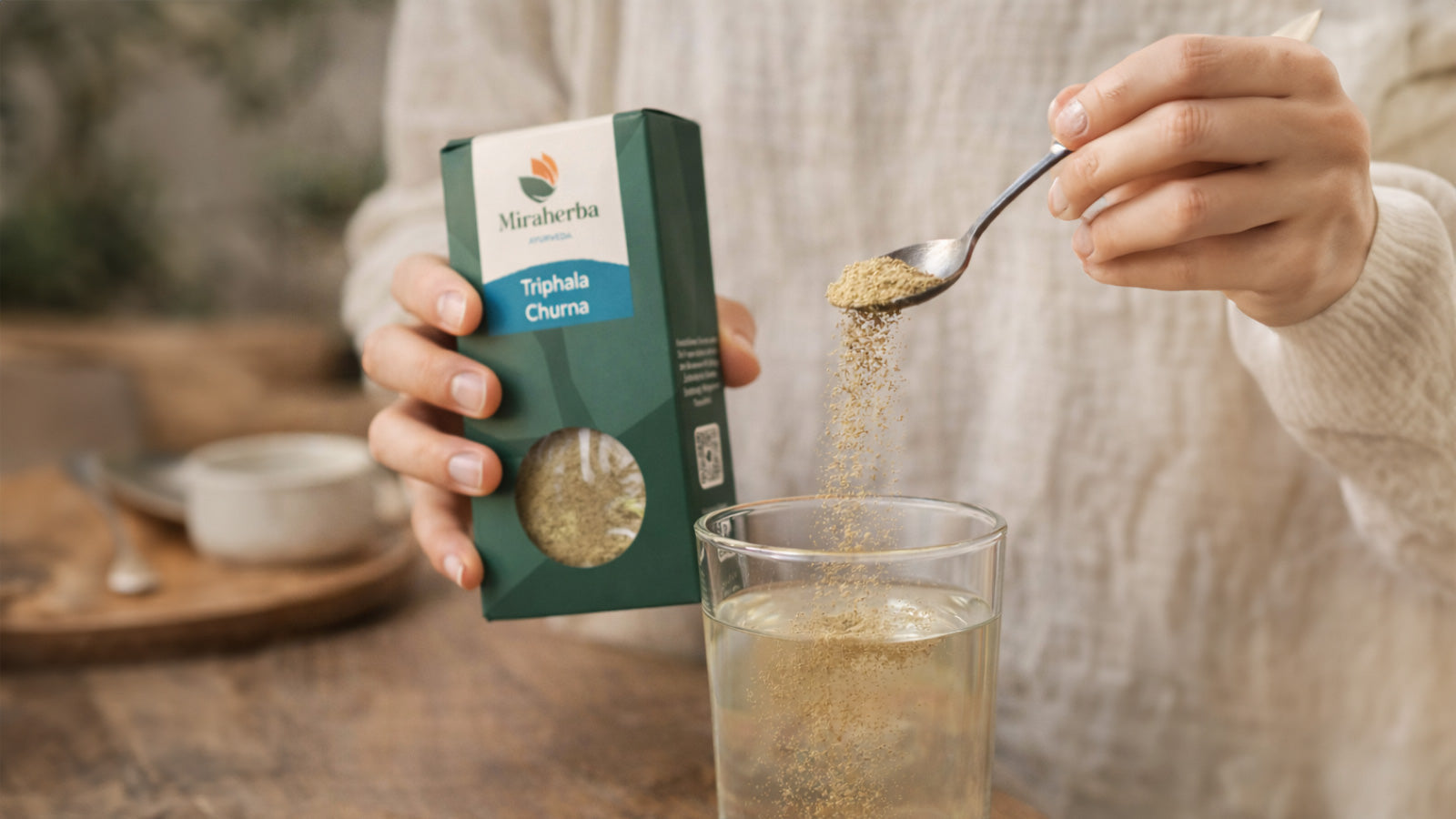
Rasayanas as churna: If the Rasayana comes as a ground powder mixture, it can either be sprinkled over food or dissolved in hot water, milk or tea. For this, one classically mixes 2 tbsp churna with 1 tbsp honey to form a paste and dissolves it in hot water before drinking.
Rasayanas as pills
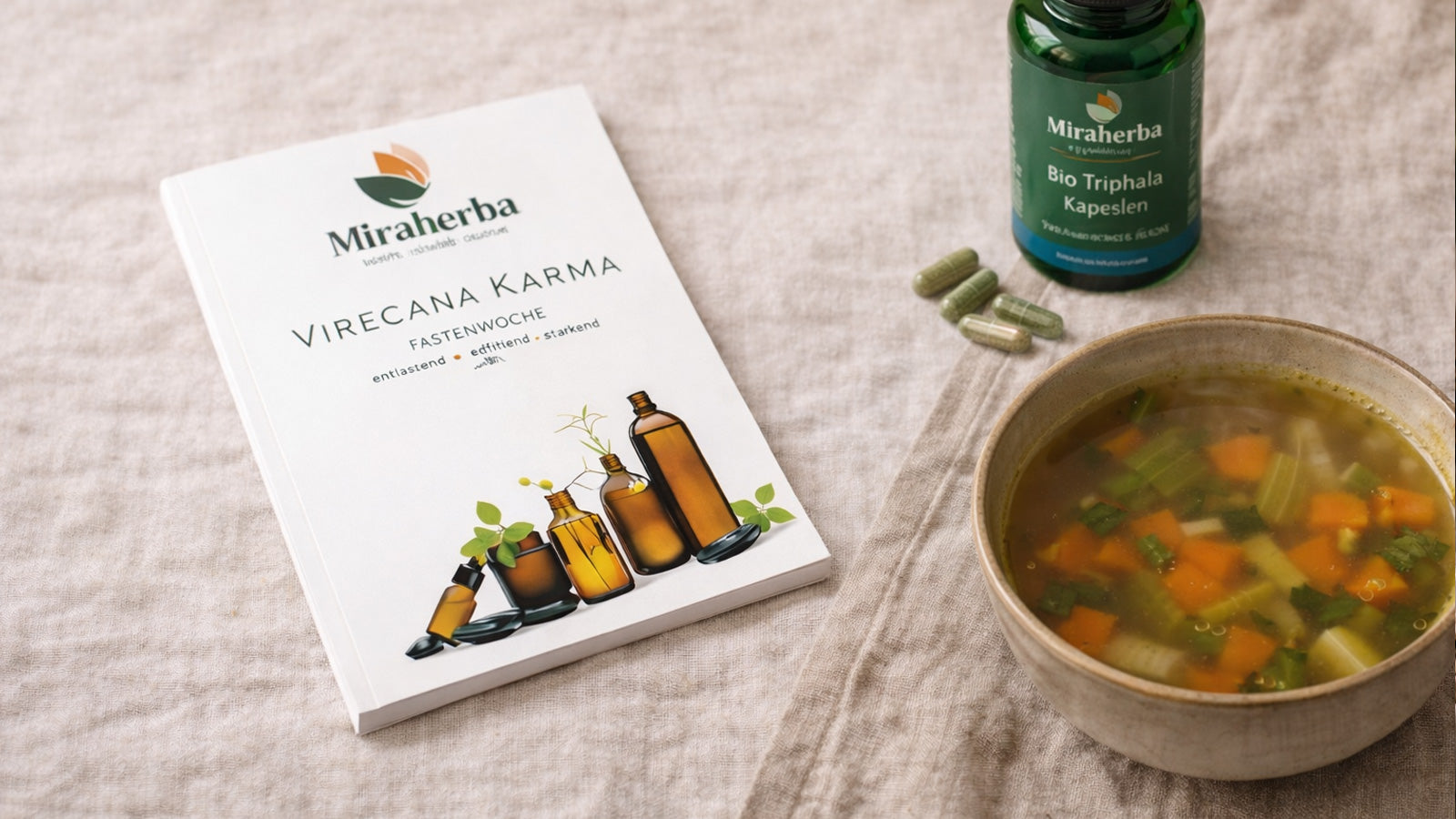
Some Rasayanas come in dragee or pellet form, in which case the intake is self-explanatory. Open mouth, pill in, warm water, swallow, done.
Aristham: Rasayanas to drink
Rasayanas in elixir form, the Aristham. Here we have Ayurvedic wine. Herbal mixtures mixed with red wine. Of course, one should enjoy these alcoholic extracts with appropriate restraint.
What is Rasayana Chikitsa?
Vasant Lad, one of the leading Ayurvedic physicians, describes this branch of Ayurvedic medicine as "rejuvenation therapy that brings about renewal, regeneration and restoration of all body cells, tissues and organs; it increases immune power, endurance and longevity."
There are two types of Rasayana Chikitsa:
Basically, there are two ways to perform Rasayana Chikitsa. Together with the patient, the Ayurveda therapist decides which cure is right.
The short Rasayana cure
If the patient has little time, enthusiasm and perseverance, he can continue his daily life without major sacrifices. As a rule, it is recommended to change your diet. Based on their age, gender, habits, life circumstances, their constitution (prakruti) and medical history, the patient is additionally prescribed a few selected Rasayanas.
The comprehensive Rasayana cure
To detoxify and renew not only on a physical but also on a mental level, Ayurvedic medicine recommends a more intensive form of Rasayana Chikitsa. Similar to an inpatient cure, the patient can engage in the cure independently of his daily life and environment in an Ayurvedic spa center. During this time, he is under constant observation by an Ayurveda specialist. Rasayana therapy is a comprehensive concept that combines various Ayurvedic procedures depending on the initial situation and therapy goal.
The cure proceeds in three stages: first, nutrient uptake is increased by administering, for example, Shatavari, milk, ghee, etc. Then agni (digestive fire) enhancing agents are introduced that improve digestion, metabolism and nutrient absorption. Finally, the administration of herbs such as Guggulu and Tulsi results in the Srotas (body's microchannels) being cleansed and made functional.
What is the most famous Rasayana?
The Charaka-Samhita reports on the Amlamus Chyawanaprash: The fruity-spicy confection is said to be the most fortifying and vitalizing Rasayana. It increases immune defense power, digestive fire agni and vital force. Its base is the Amla fruit (Emblica Officinalis) and cane sugar, but it also contains well over 50 other plants, roots and herbs. Daily intake of the Rasayana, dissolved in warm milk, is recommended. Consumed this way, it is said to promote physical and mental development.
Simple Rasayanas for increasing well-being - Ajasrika Rasayana
In general, ghee, honey and warm milk are good Rasayanas that can be taken without much effort as simple foods (Ajasrika-Rasayana).
Why are some Rasayanas so long-lasting?
Most Rasayanas are made shelf-stable in honey, ghee or wine. The recipes for Avalehas (herbal fruit purees) are elaborate. Many ingredients, usually fruits, roots, vegetables, spices, herbs, ghee and honey, are cooked in large, heavy iron pots until a thick mass without water content is formed. This not only makes the Rasayana more intense and potent. Through the breakdown of simple sugar and protein chains and the formation of more stable compounds, it is also made shelf-stable without refrigeration.
A few fun facts about Rasayana to close
Overall, Rasayanas are said to "grant a long life, cure diseases, strengthen digestive fire, promote strength and appearance, voice and mind and are thus rejuvenating agents for smoothing the skin, against graying and promote complexion."
There are numerous different Rasayanas, such as Vaca (acorus calamus), which is said to promote speech ability and language development, or Narasimha Rasayana. To name just a few. Quite focused on increasing manly power, one learns in the Charaka-Samhita what happens when a man takes the Lion-Man Rasayana "Narasimha Rasayana" for one month. Then "he becomes rich, strong as a wild buffalo, swift as a horse, free from suffering, his hair shines like the body of bees, his mouth fragrant as honey, desired by women, rich in words, mind and cleverness. Digestion is good, the body strong as that of the man-lion, shining like molten gold".
Conclusion
Rasayanas are an essential part of Ayurveda for strengthening and regenerating body and mind. They work on different levels by supporting the immune system and promoting the balance of the Doshas. Whether as paste, powder, pill or elixir – Rasayanas offer diverse options to increase well-being and improve quality of life.