Tulsi or Tulasi is also known as "sacred basil" or king's herb. While one of the names for the Asian medicinal plant Tulsi is "Indian basil" and it can be used in the kitchen, in terms of taste, Tulsi cannot be compared to the Italian basil commonly found in our region. The green shrubby Tulsi herb is rich in antibacterial and antioxidant active ingredients and is a popular medicinal herb in Ayurveda medicine. The Tulsi shrub itself holds a special place in Hindu religion and culture. Learn more about the mythical significance of the sacred plant Tulasi and the use of Tulsi as a medicinal herb in Ayurveda medicine.
The Most Important Points at a Glance
- Tulsi is rich in antibacterial and antioxidant active ingredients.
- In Indian mythology, Tulsi is revered as sacred.
- In Ayurveda, Tulsi is used as an adaptogen to balance stress.
- Tulsi reduces Vata and Kapha and has a heating effect.
Tulasi in Indian Mythology: Why the Basil is Sacred
In nearly every Hindu temple and in front of many Indian homes, you will find it: the green Tulsi shrub. The shrub is carefully tended and revered during ceremonies and pujas. The Tulsi plant owes its honor mainly to the story of the goddess Tulasi. It is said that she transformed into the form of the plant to serve humanity. In this form, she offers protection and brings health and lifelong happiness. It is for good reason that many prayer beads (malas) are made from the seeds or wood of the Tulsi plant. Simply touching the Tulsi plant is said to cleanse one of sins.
Another legend tells that the god Jalandhar was blessed by Vishnu for his many sacred deeds. Vishnu gave him the gift of becoming invisible - but only as long as his wife remained faithful to him. Jalandhar was married to Tulasi, who was known for her faithfulness to her husband. However, Jalandhar became arrogant because of the gift bestowed upon him and began to torment the people around him. In their distress, the afflicted turned to Vishnu. So Vishnu took on the form of the husband and seduced Tulasi into infidelity, causing Jalandhar to lose the gift of invisibility and be killed by the people.
Tulasi realized that she had been deceived and confronted Vishnu. As compensation, he promised her that she would be worshipped by women forever for her faithfulness to her husband and thus become immortal. Therefore, in every Vishnu temple, not only is Vishnu honored, but the sacred Tulsi plant is also revered there.
There are several other mythical stories surrounding the sacred Tulsi herb. As an offering to Krishna, for example, it is said to lead to salvation and protect against death, illness, and misfortune. It is also said to intimidate Yama, the god of death. All these stories explain the addition of "sacred" basil.
What Tulsi Contains
In Ayurveda, Tulsi has been known for thousands of years as an adaptogen, meaning a plant that balances and alleviates physical and mental stress. Tulsi is also considered a Rasayana, a life-extending food. Through the bitter substances and essential oils contained in Indian basil, such as camphene and eugenol, the herb has a bitter, diaphoretic, antiseptic, pain-relieving, digestive-promoting, and heart-strengthening effect. Furthermore, the essential oils give it its distinctive aroma, which is reminiscent of camphor and clove.
In addition, there are a whole range of antioxidants, phenols, and flavonoids. These active ingredients are responsible for the excellent antibacterial effectiveness in various diseases as well as for effectiveness against worm infestation.
Rasa and Guna: Tulsi in Ayurveda Medicine
In Ayurveda, medicinal plants are not prescribed based on their indication but rather depending on their "taste" (rasa) and their properties (guna). What would Ayurveda medicine be without considering constitutional types? Of course, when prescribing, the underlying Dosha and any existing Dosha imbalances are also decisive. Looking at Tulsi from an Ayurvedic perspective, the following overview emerges:
| Effect on the Doshas | Reducing Vata and Kapha |
| Rasa (Taste) | bitter, pungent |
| Guna (Property) | light, dry |
| Vipaka (Taste after digestion) | pungent |
| Virya (Thermal effect) | heating |
| Prabhava (Additional effect) | anthelmintic / against worm infestation |
Tulsi for Vata and Kapha Conditions
Due to its Pitta-increasing properties (pungent and heating), the Tulsi plant is prescribed for Vata and Kapha conditions. These primarily include respiratory illnesses such as dry or phlegmy cough. Its pungent and heating taste supports the stimulation of metabolism. Tulsi clears Ama buildup, thus having a positive effect on digestive tract disorders, especially abdominal pain in small children.
Sattva: Tulsi on a Subtle Level
Tulsi herb is a sattvic food. The so-called trigunas, the three subtle principles of universal order, as understood on the metaphysical level by both Vedas and Tantric traditions, are Sattva, Rajas, and Tamas. Sattva represents the positive principle of nature and enhances qualities such as generosity, equanimity, love of truth, wisdom, and tolerance. According to this belief, those who eat sattvically live longer and maintain a more positive attitude toward the environment.
Tulsi is More Than Tea – How to Use Tulsi Herb
Using Fresh Tulsi Herb
In India, fresh pressed juice is often prescribed, though unfortunately it is not available in our region. Fortunately, some organic nurseries now offer fresh Tulsi plants. The fresh leaflets can be consumed raw, added to food shortly before the end of cooking, or brewed into tea.
Tulsi is occasionally even recommended as an aphrodisiac. For this, the fresh leaves or crushed roots are consumed together with ghee.
Tulsi Tea – Recipe for Classic Tea
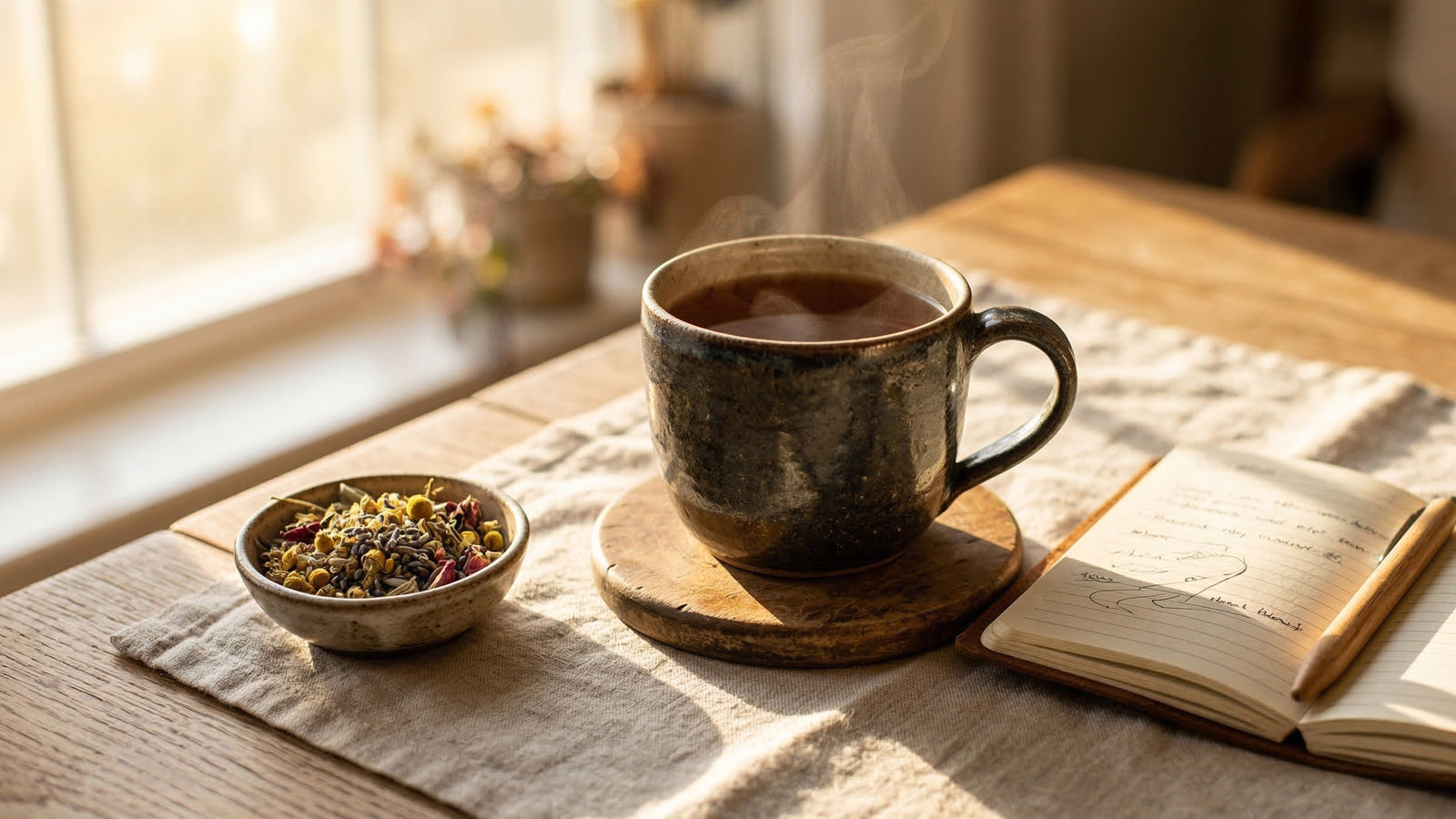
Undoubtedly, the pleasant-tasting tea made from the dried plant shows good effects. A simple recipe when a cold threatens is Tulsi tea with black pepper. Here, 1 teaspoon of dried Tulsi leaves and 2 black peppercorns are poured over with ¼ liter of water and left to steep for 5 minutes. This mixture should be drunk 3-5 cups per day for three weeks.
For children, it is recommended to prepare the tea without pepper. Instead, make it with some forest honey or ginger.
Tulsi Oil – for Inhalation and Rubbing
The fine essential oil can be used for inhalations or rubs. It shows relaxing effects for temple headaches and phlegm buildup in the chest area. In the diffuser, it spreads a pleasant aroma and also repels mosquitoes.
Conclusion
Tulsi, the sacred basil, is a versatile medicinal herb with deep spiritual significance and numerous health benefits. It is used in Ayurveda medicine to reduce stress and support the digestive system. Whether as tea, fresh herb, or essential oil – Tulsi offers many possibilities for application and benefits from a rich mythological history.